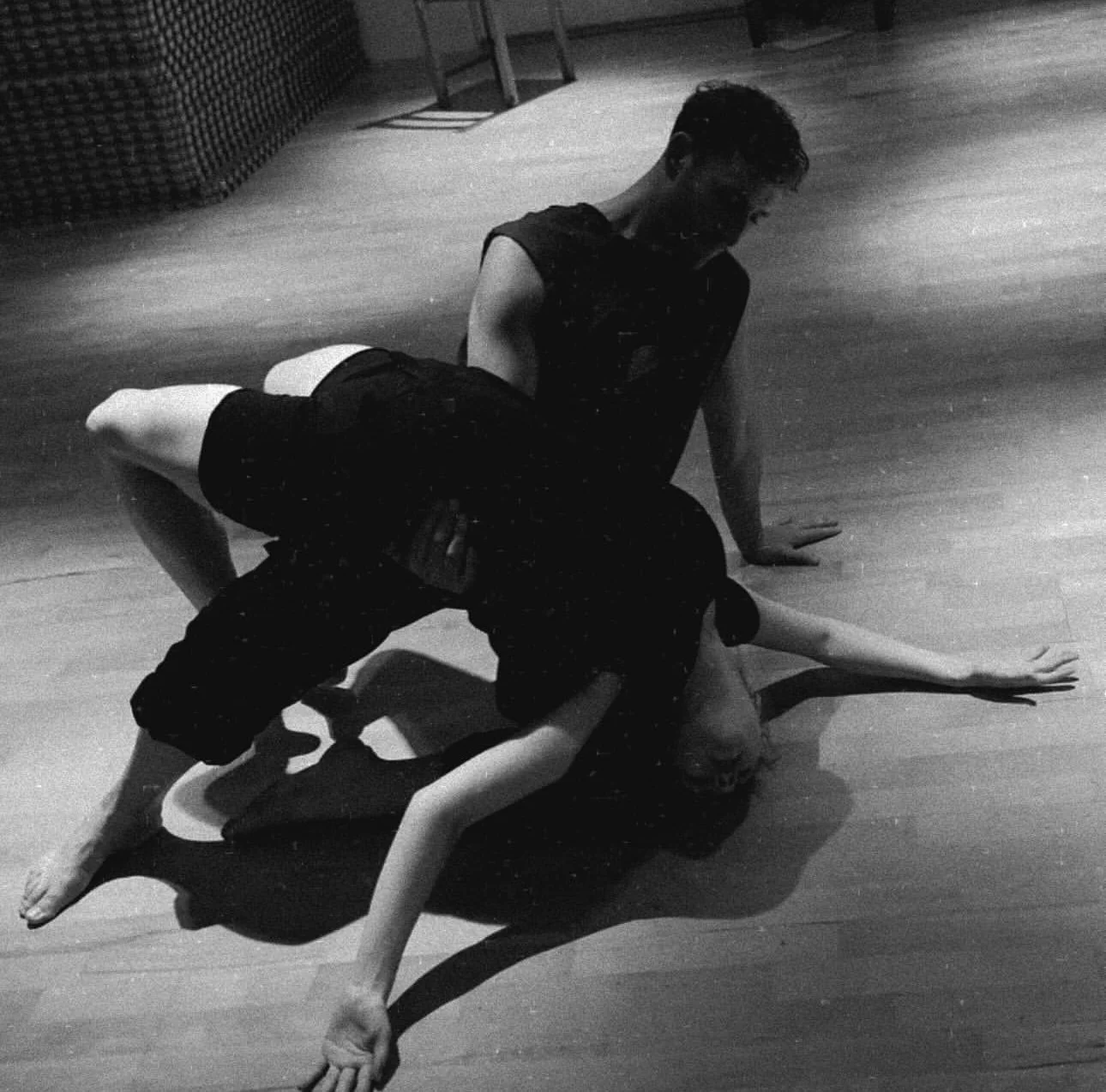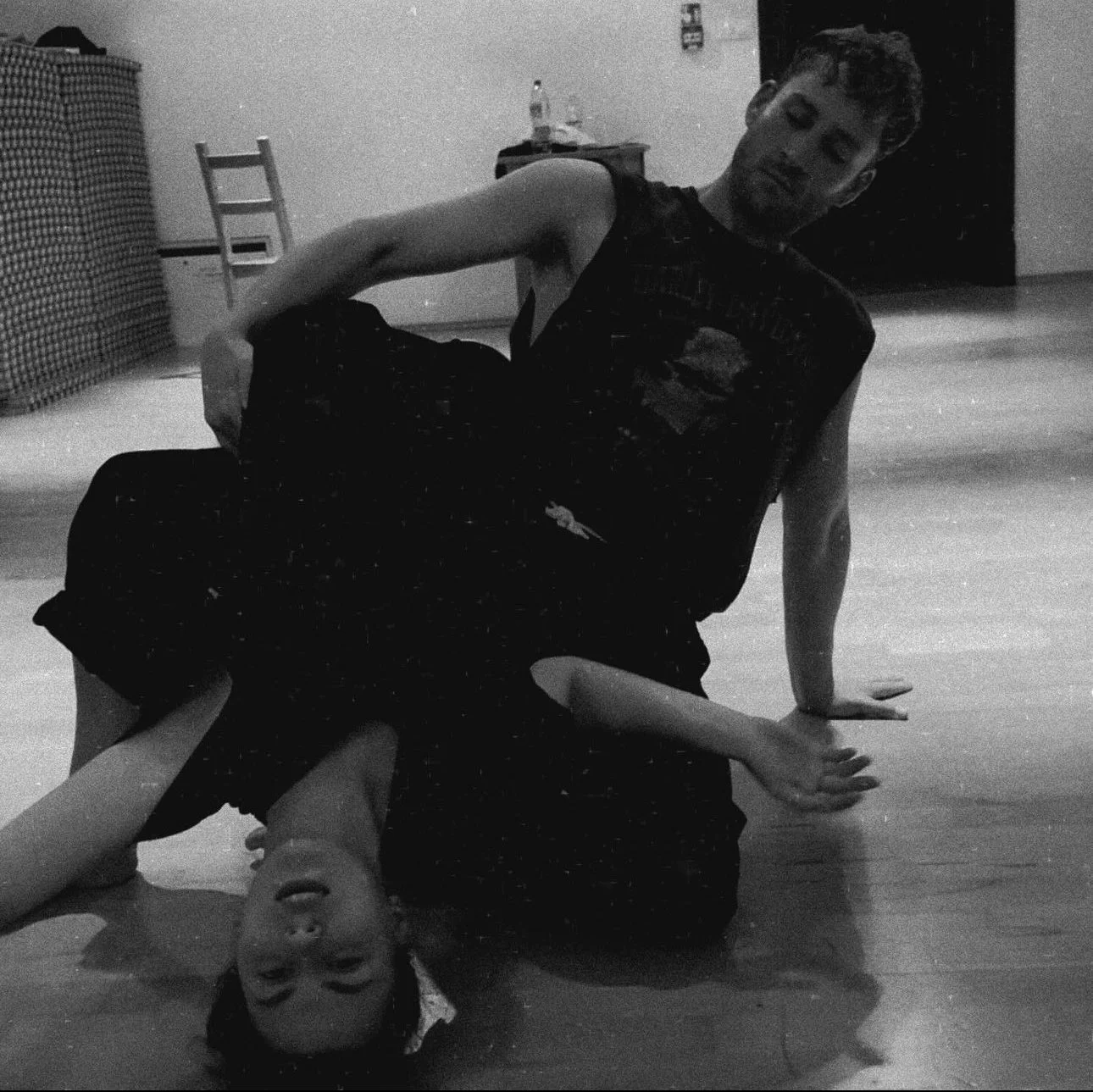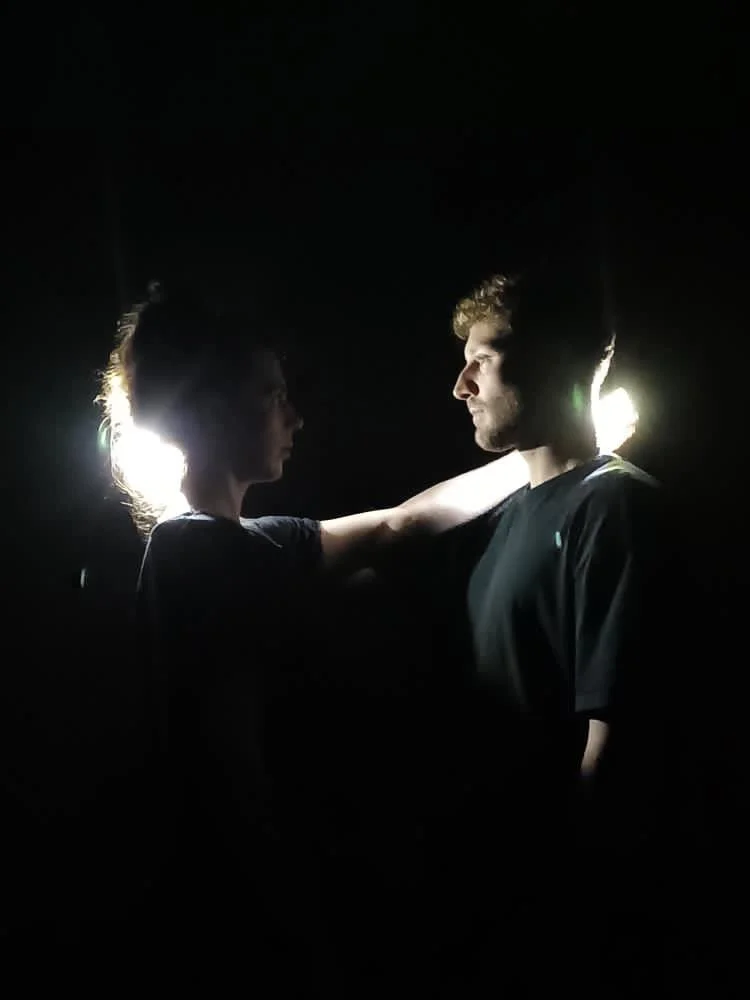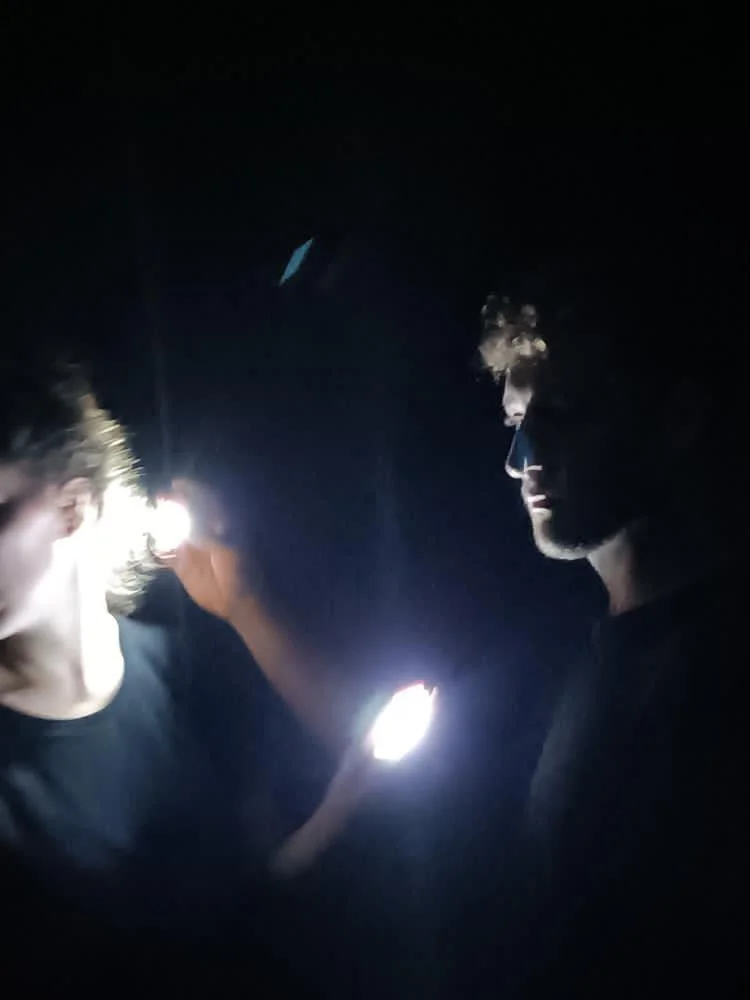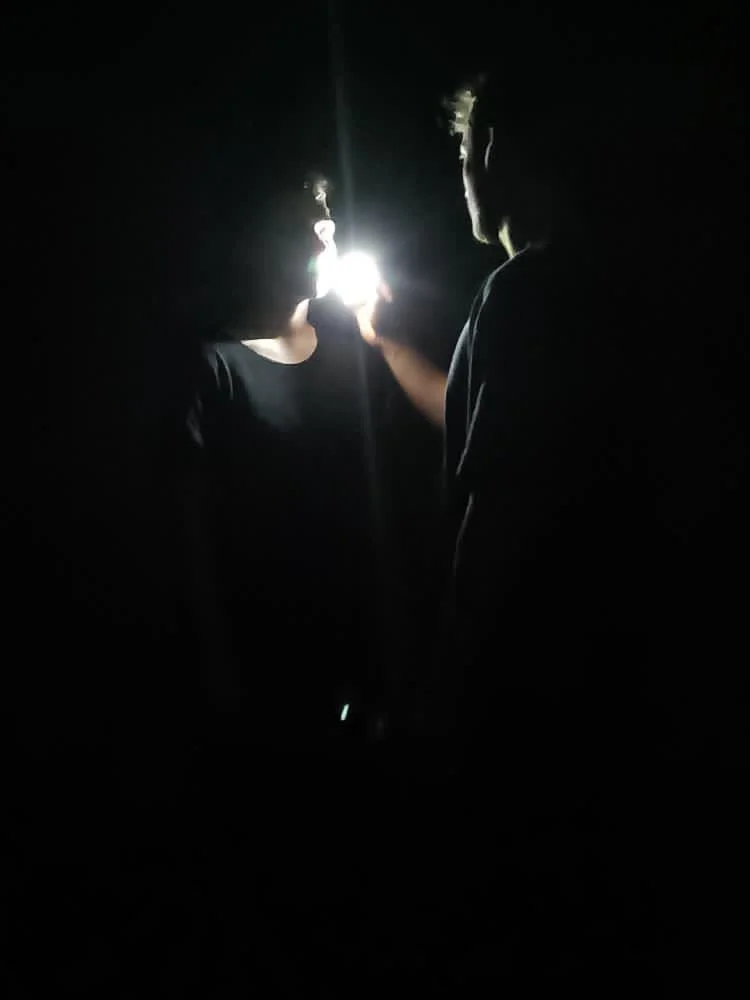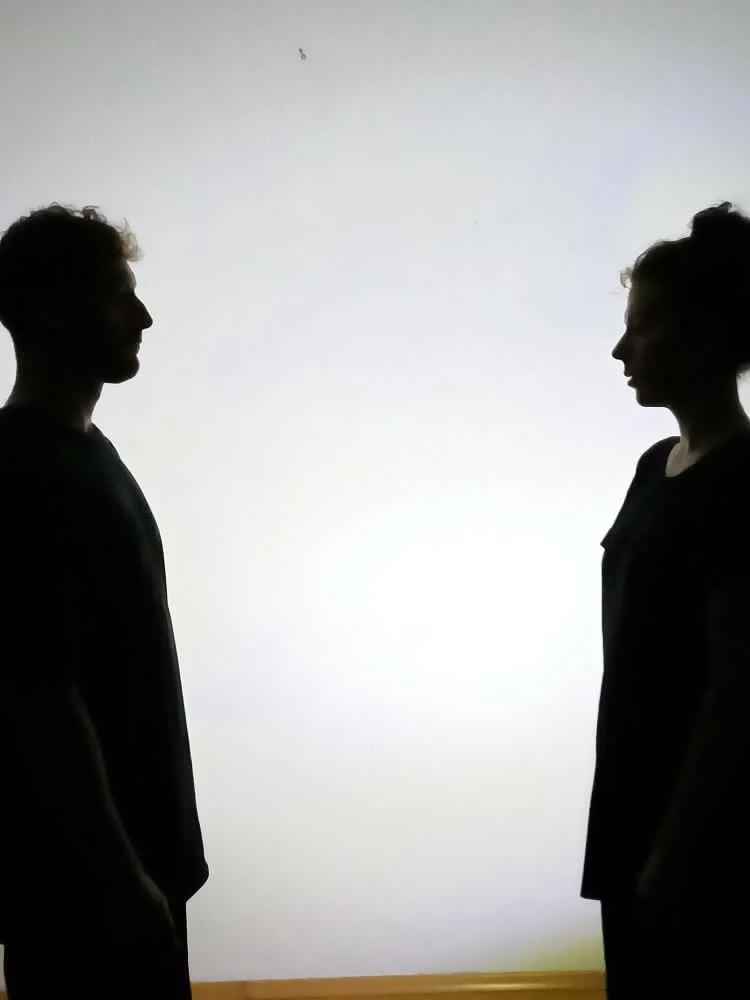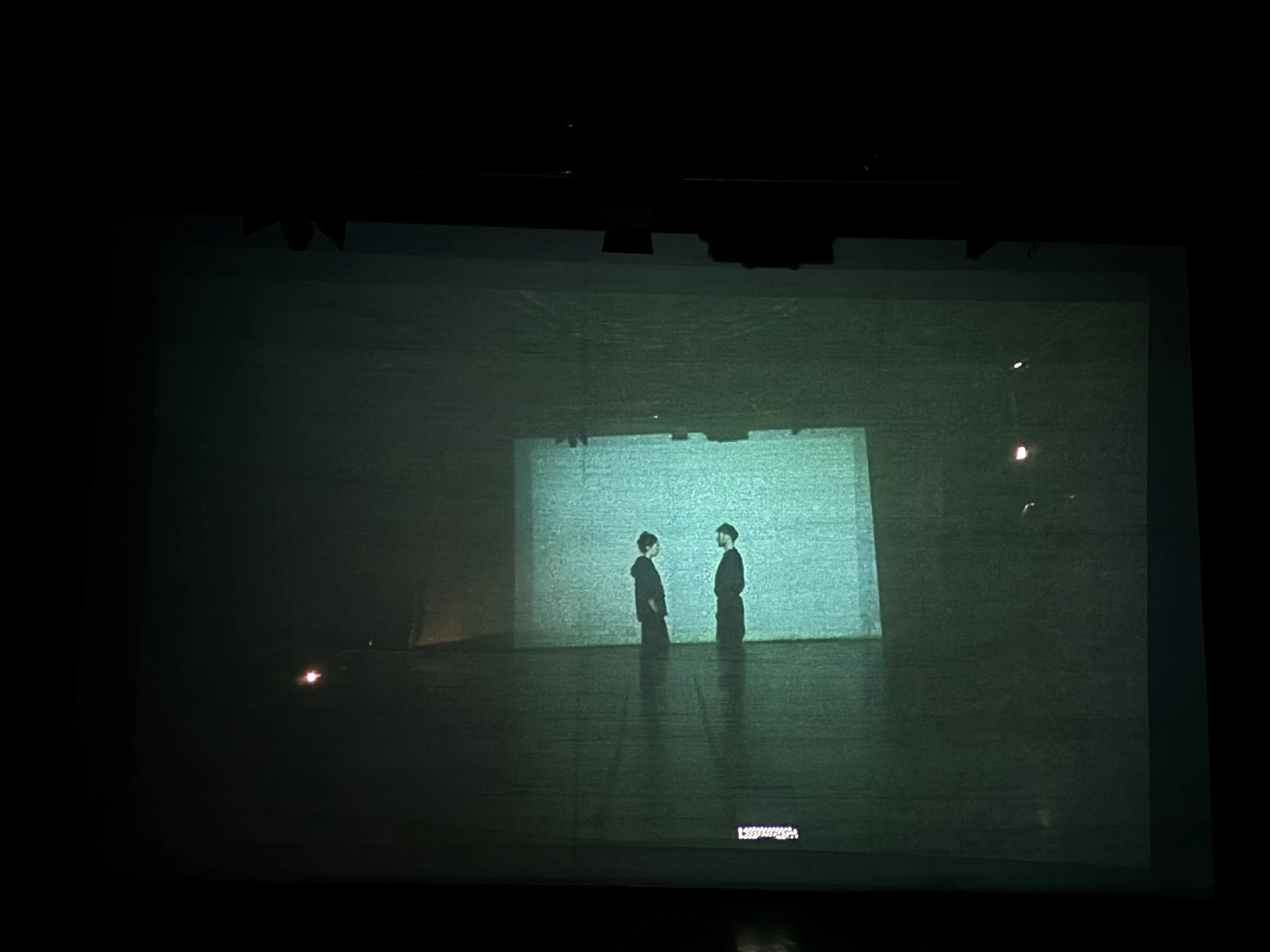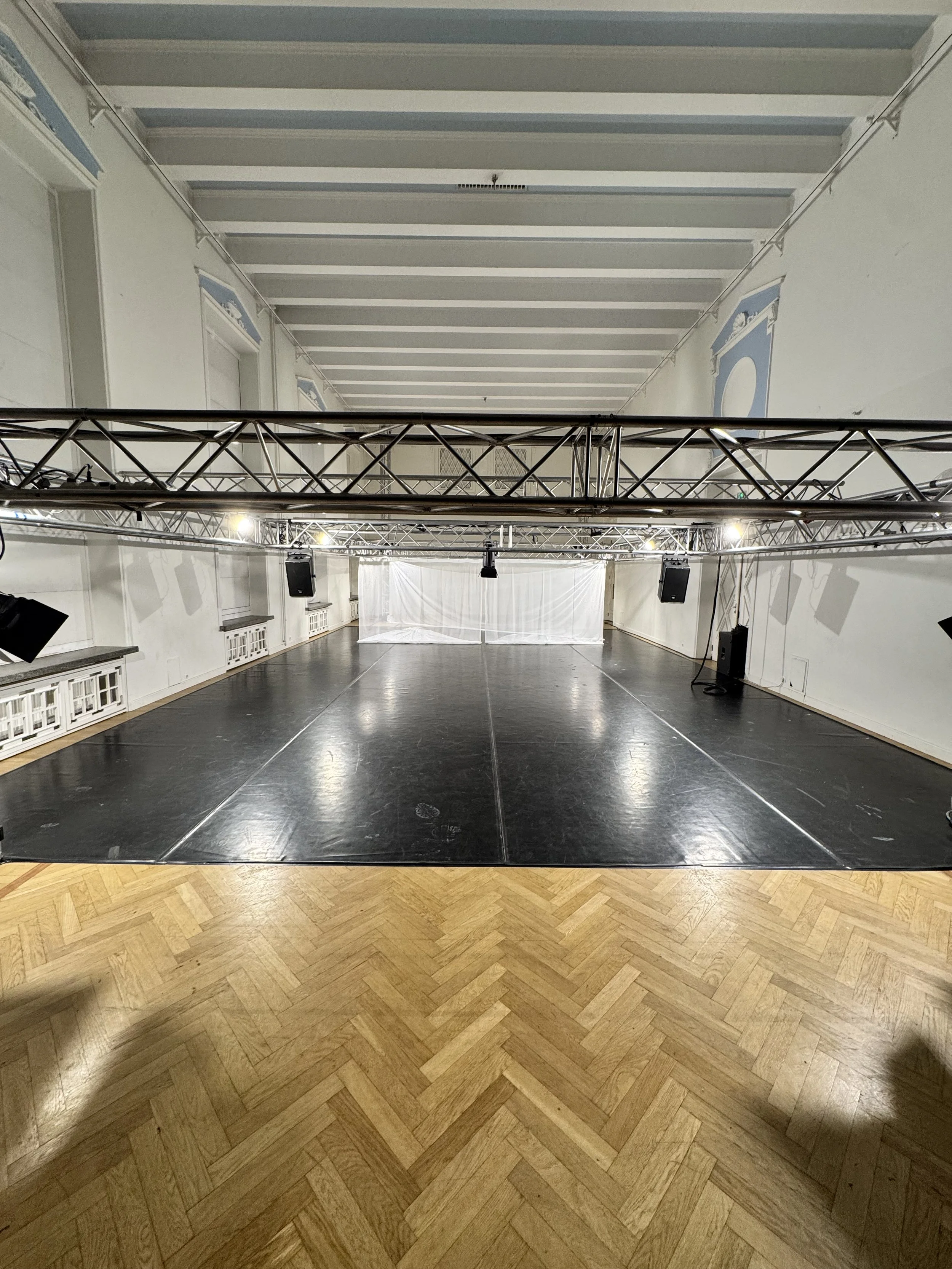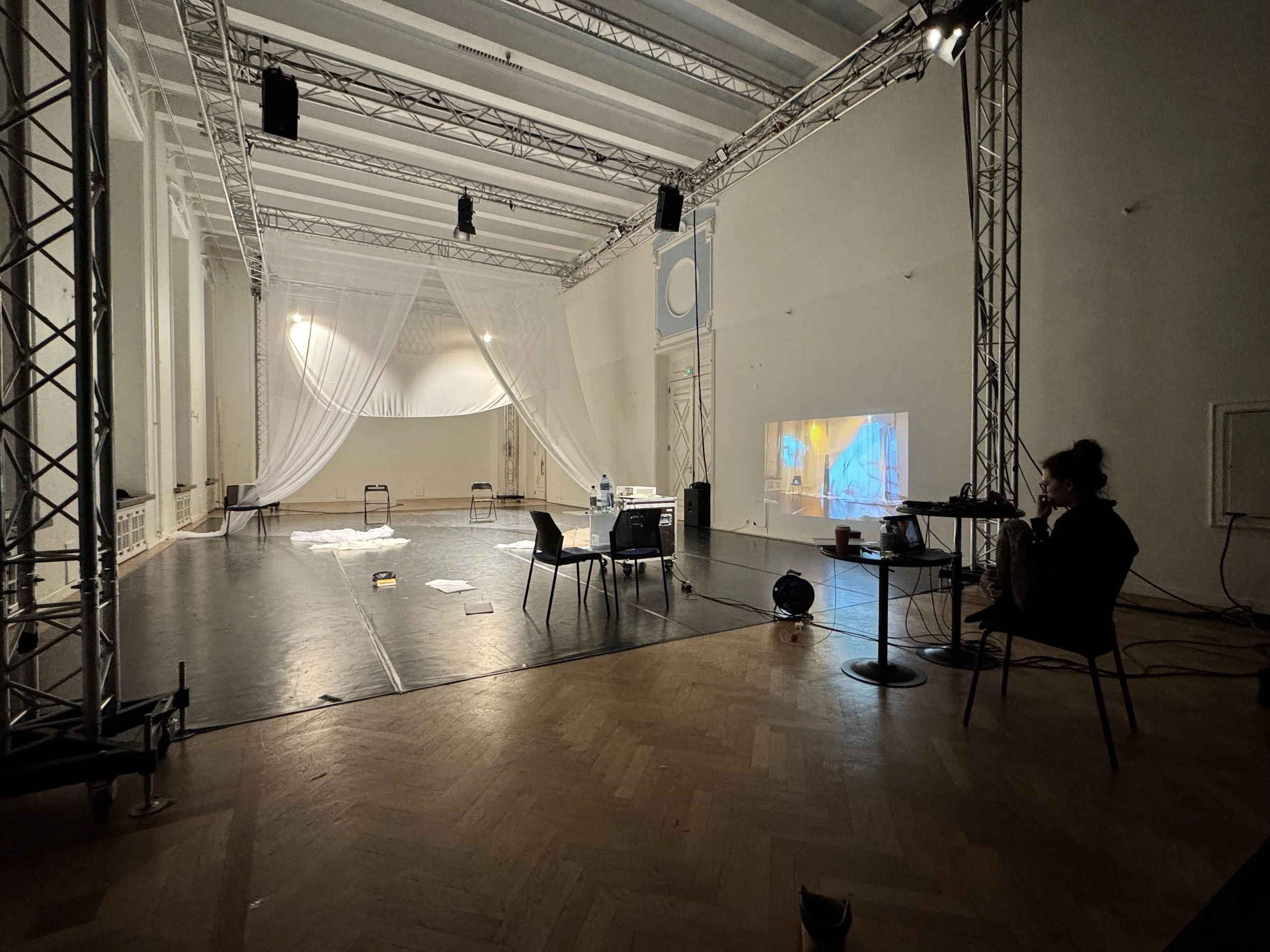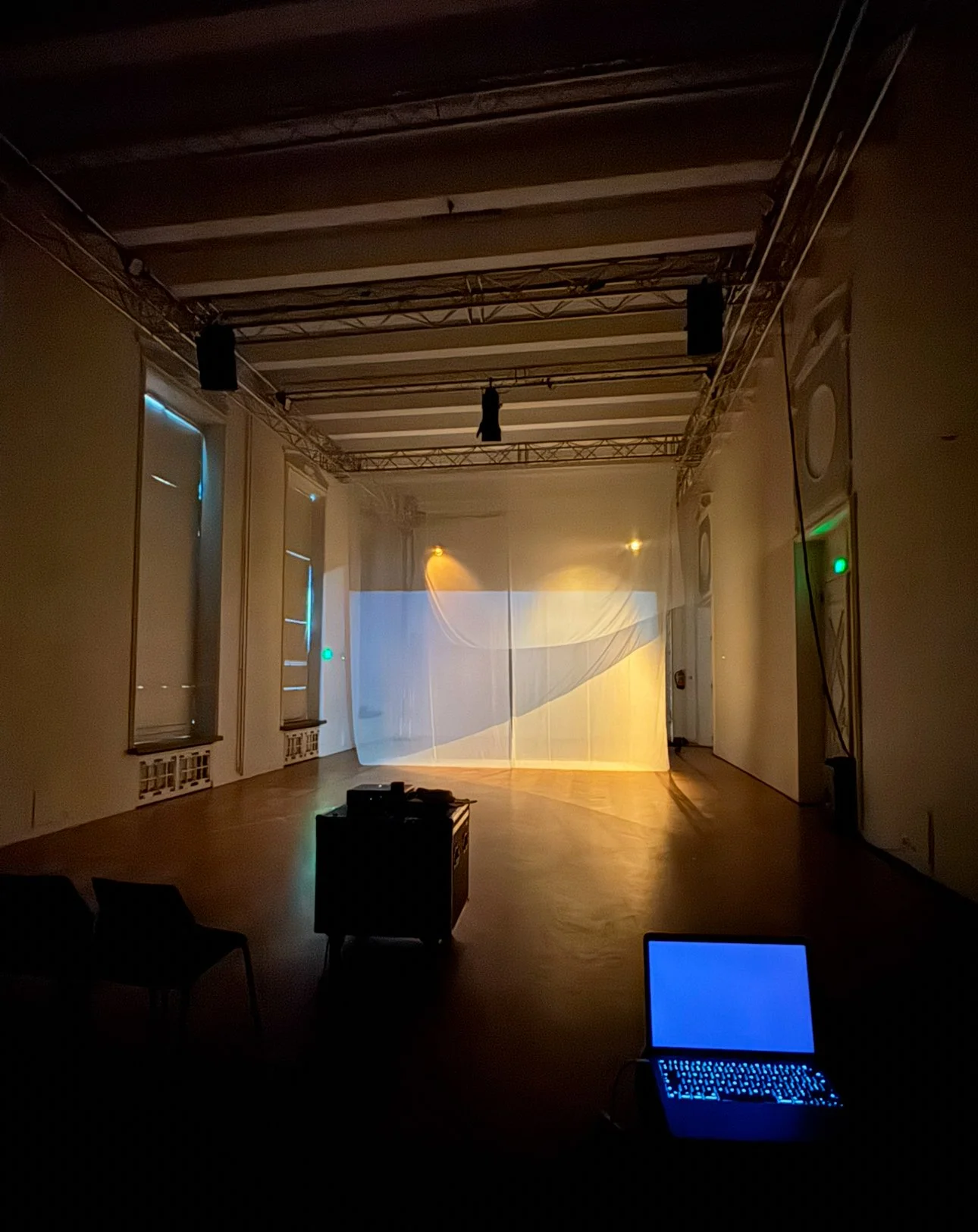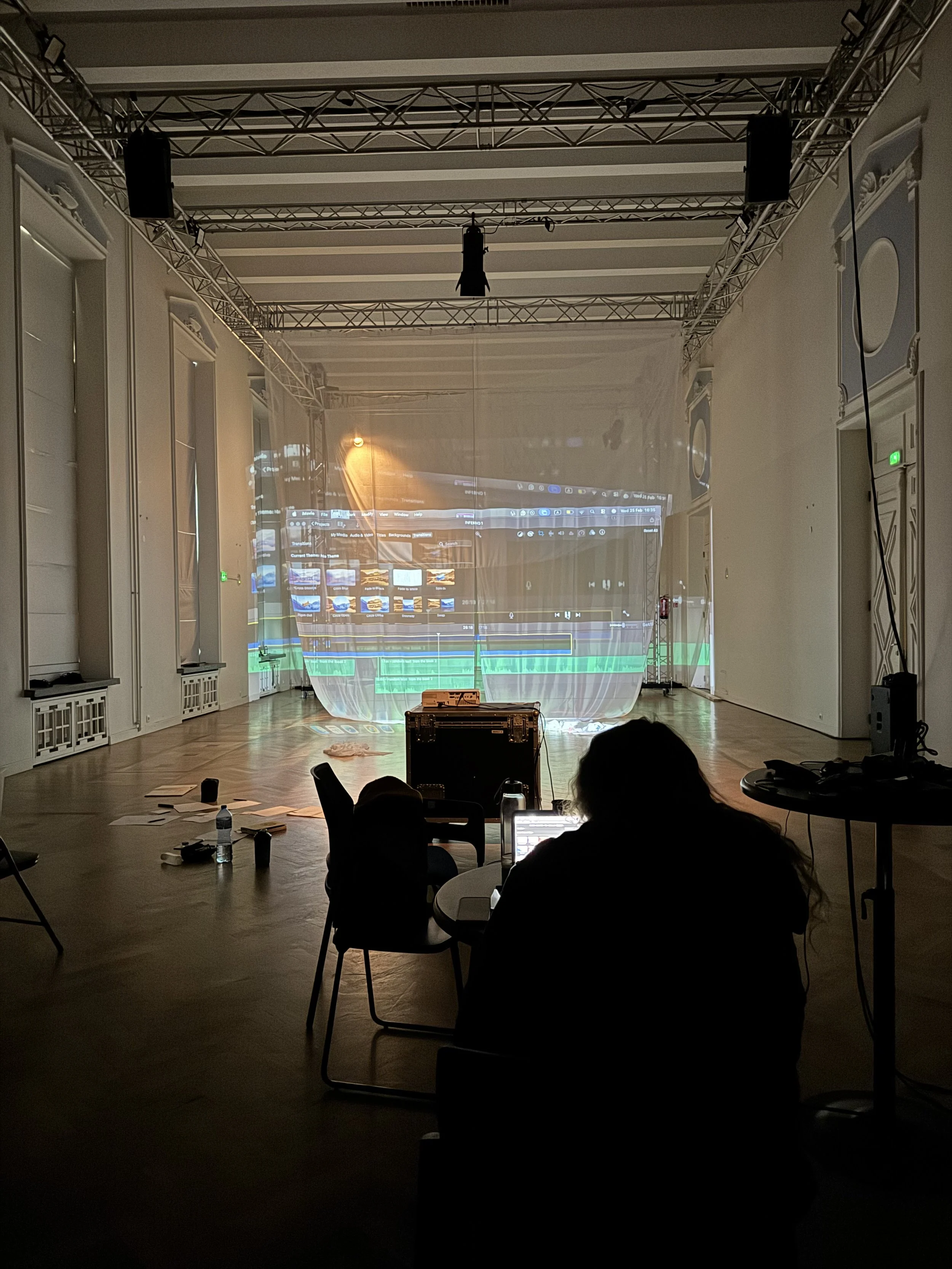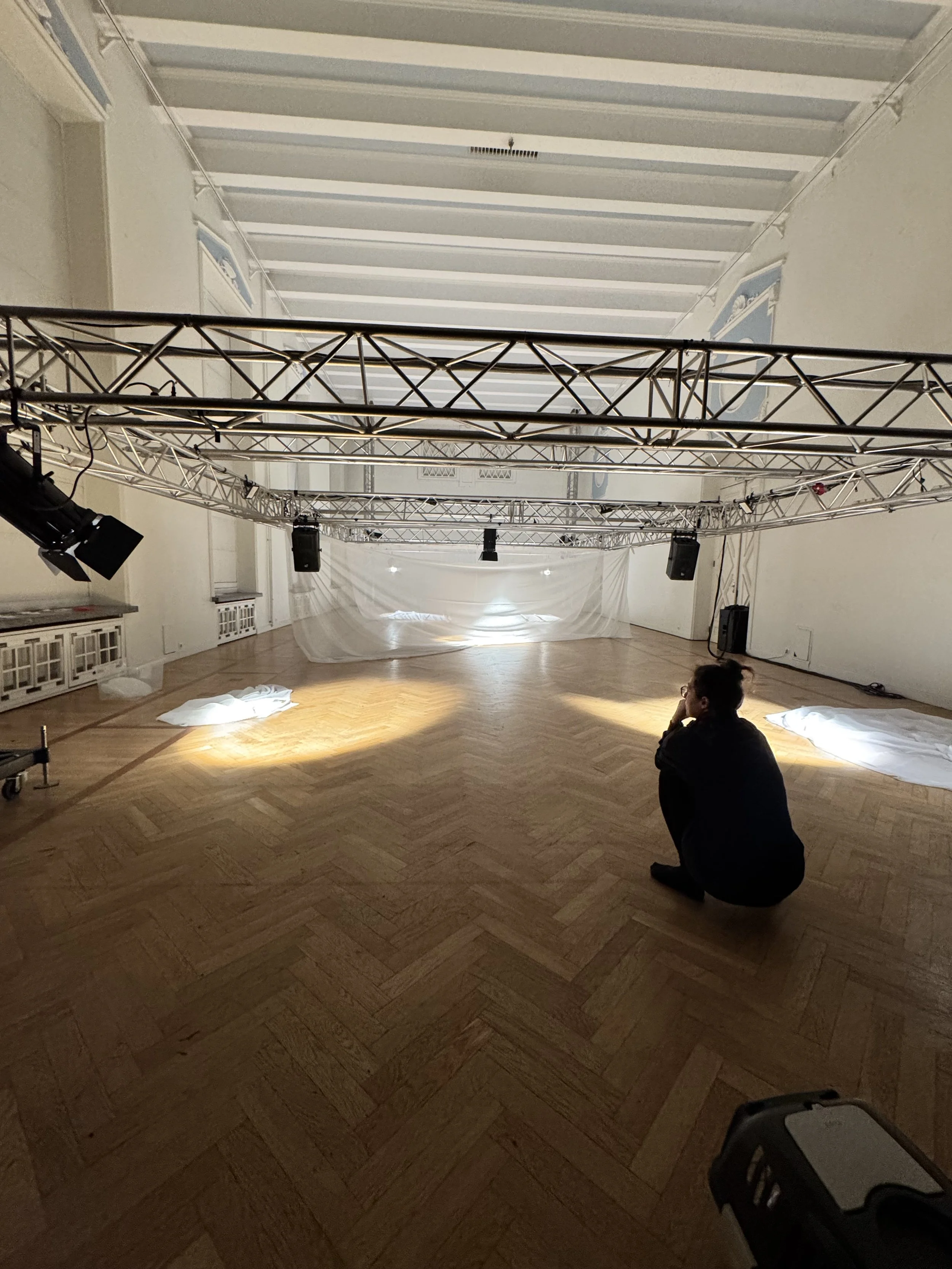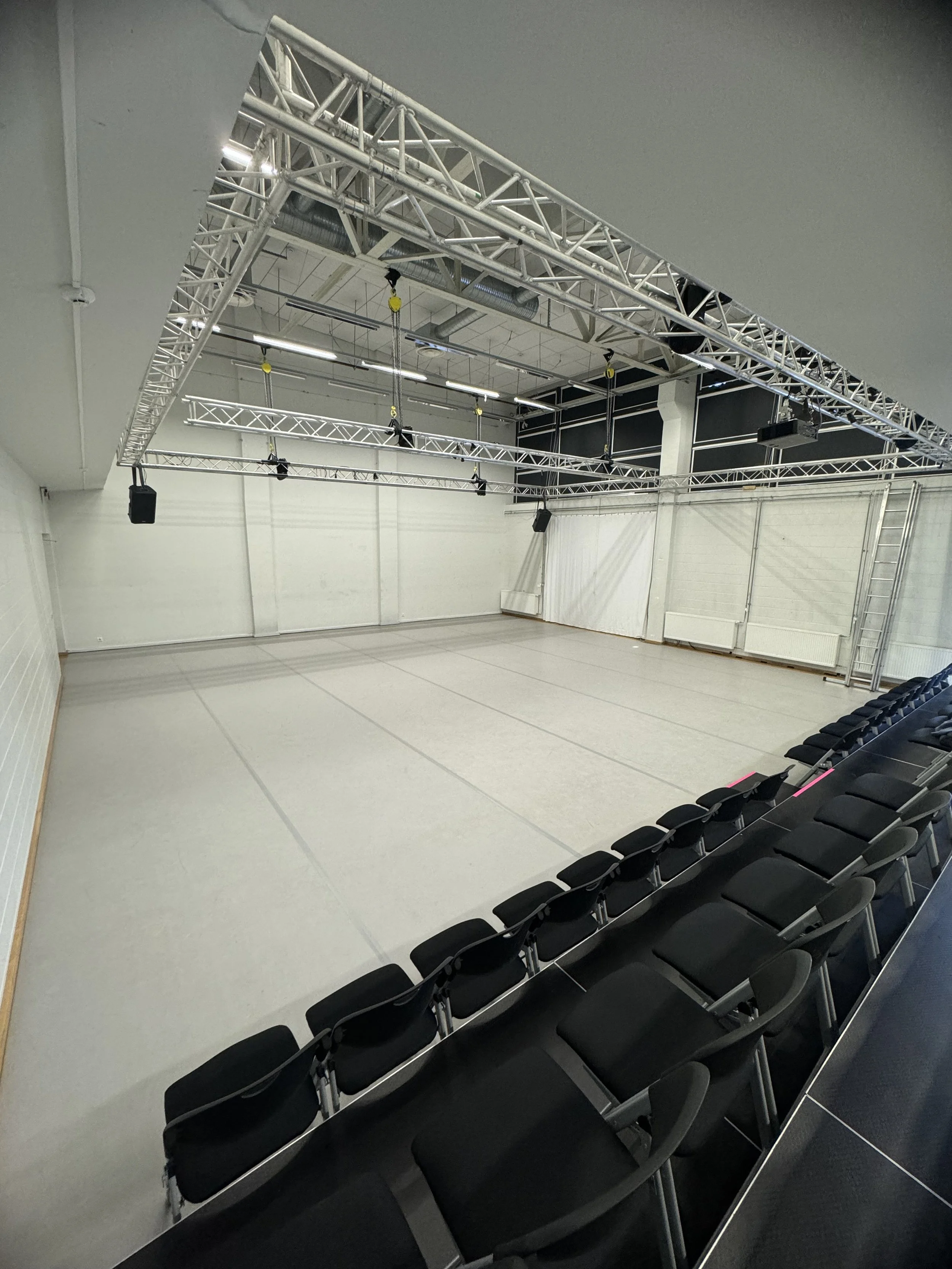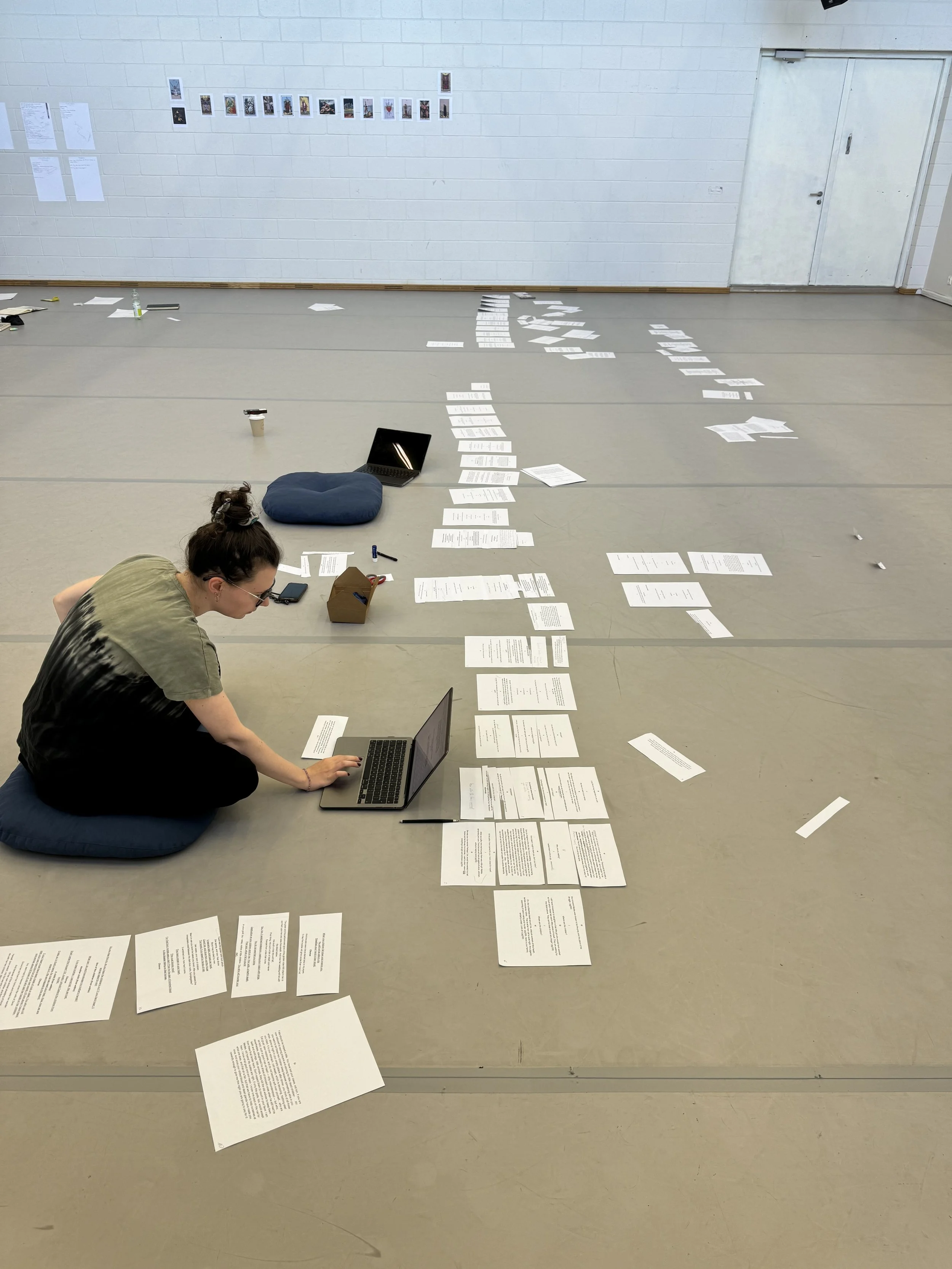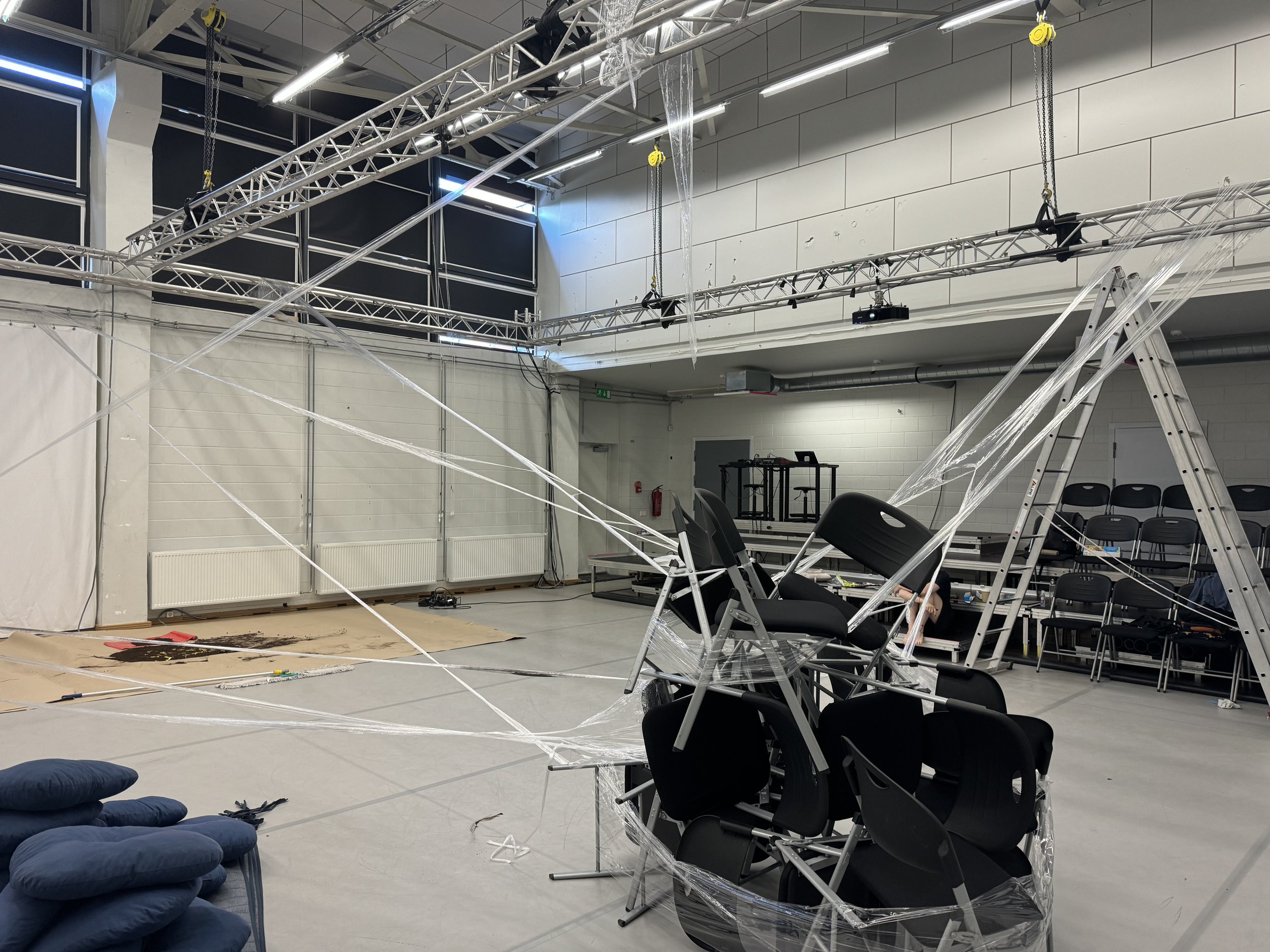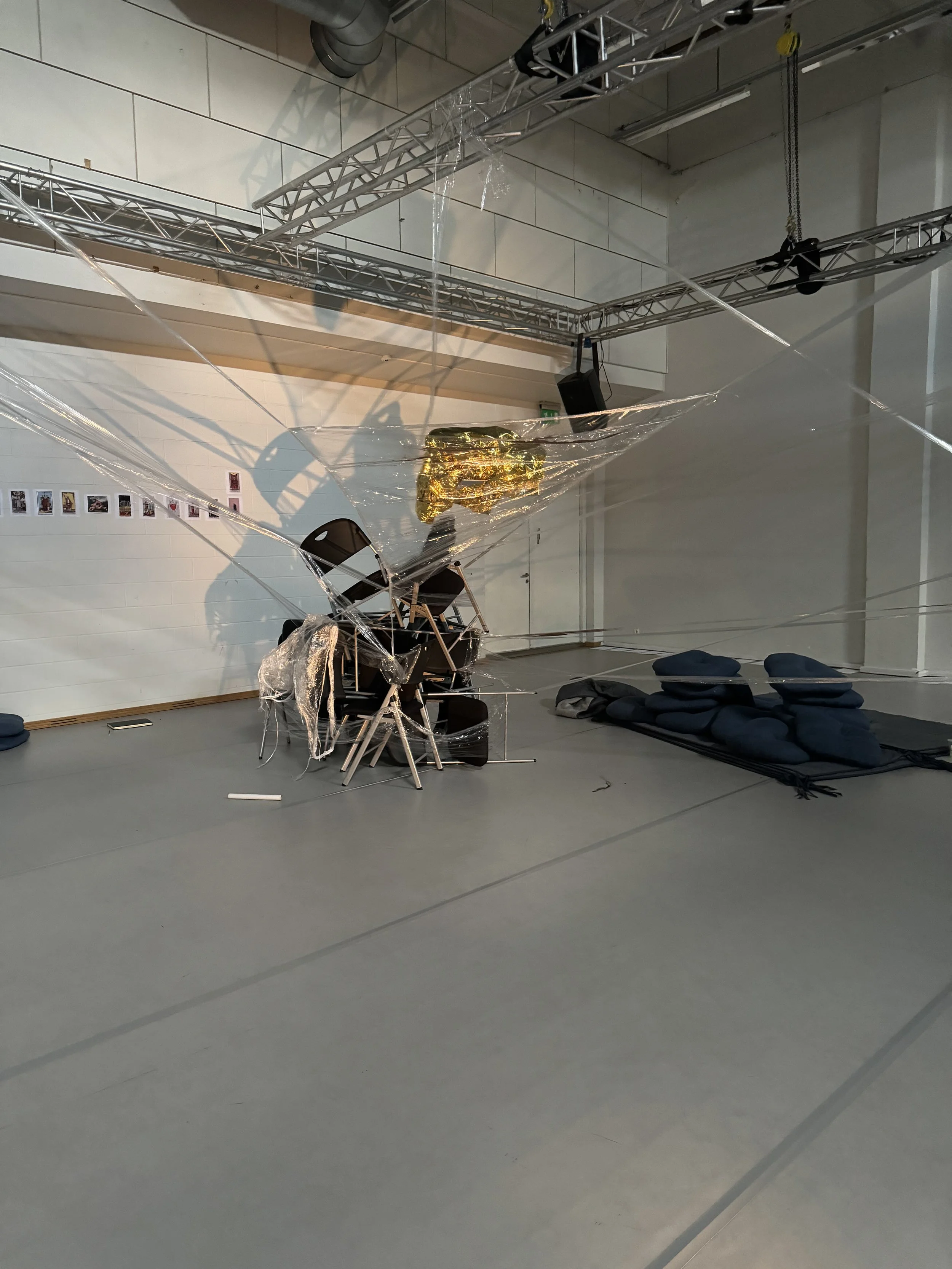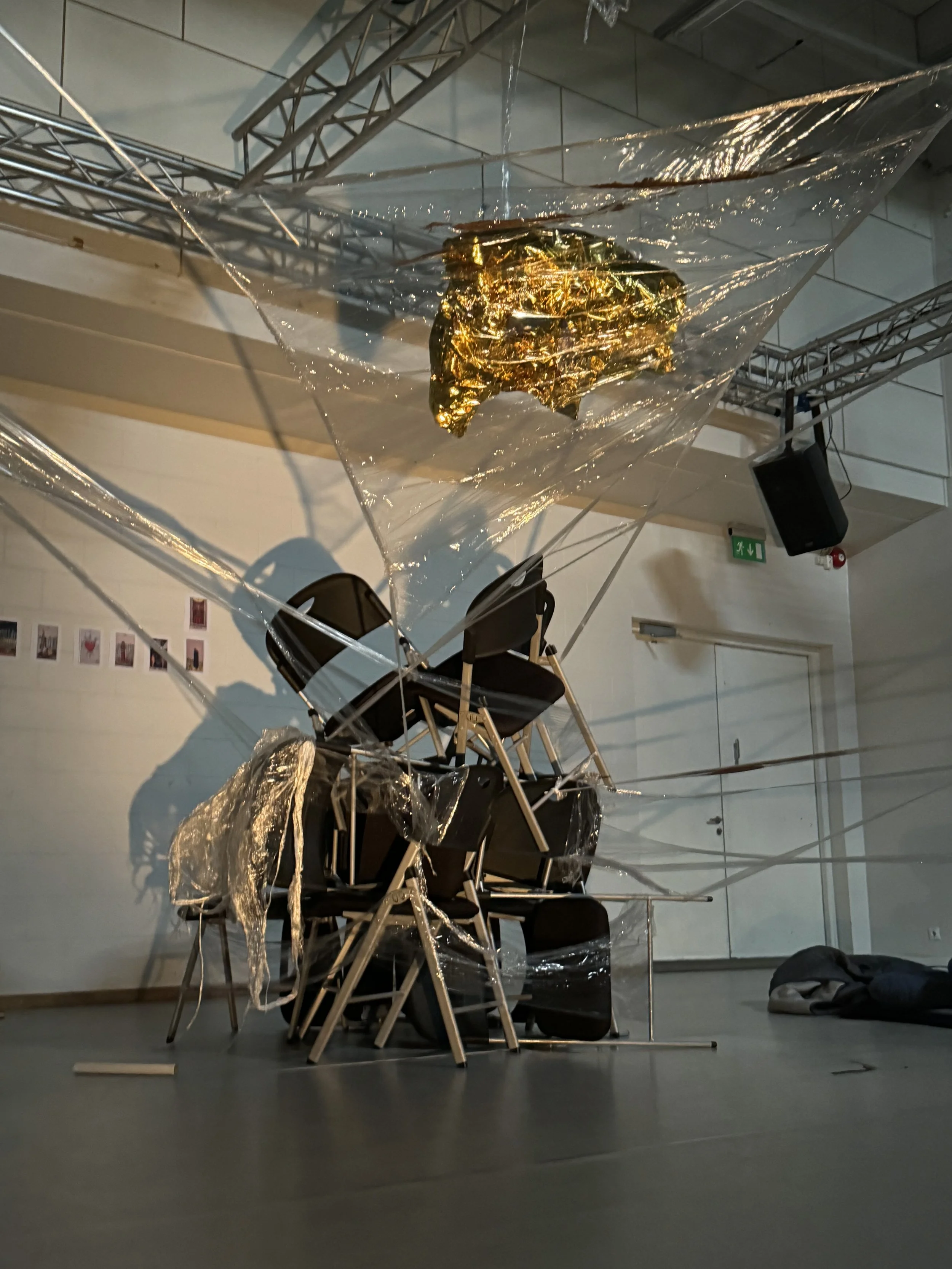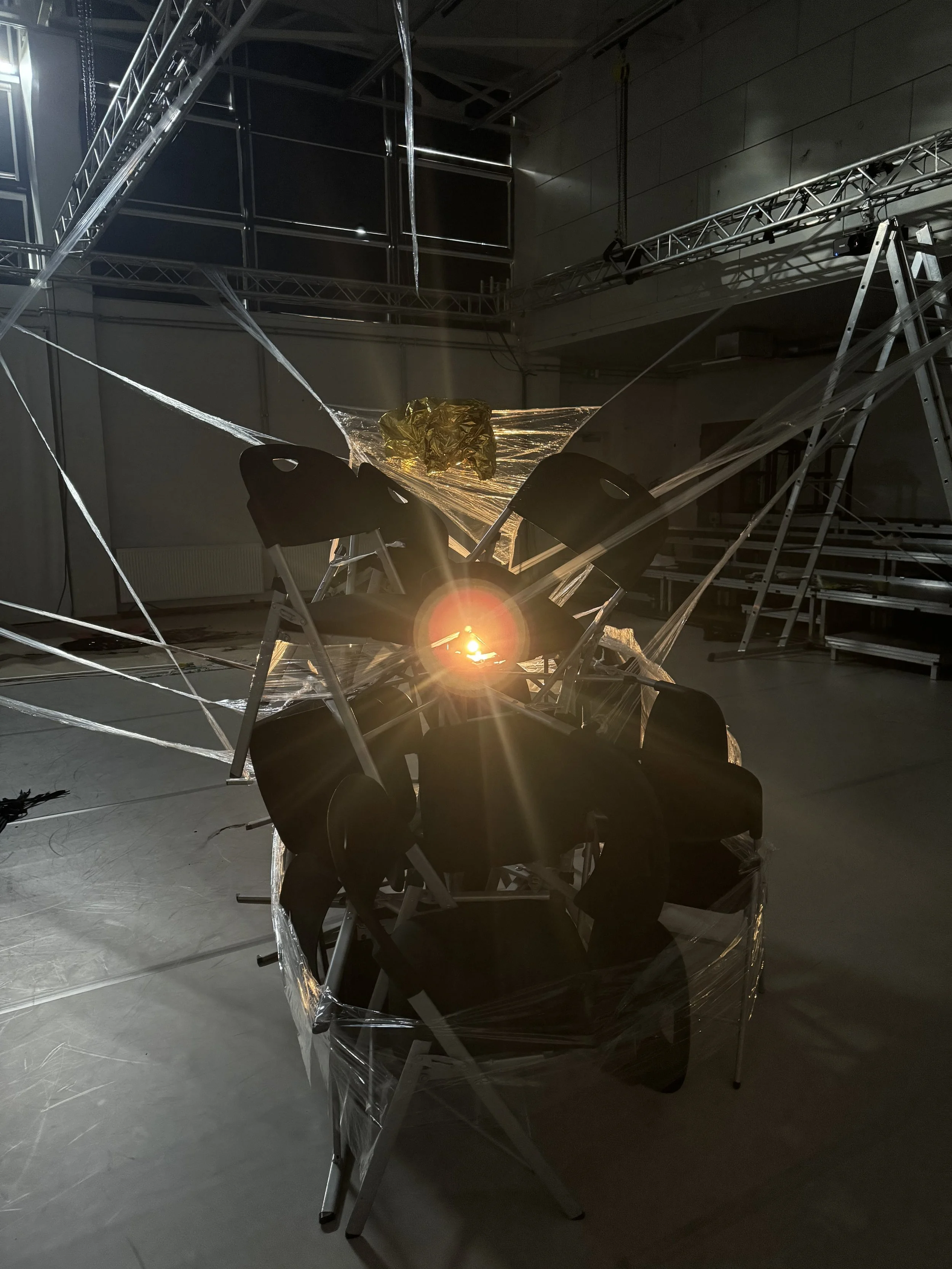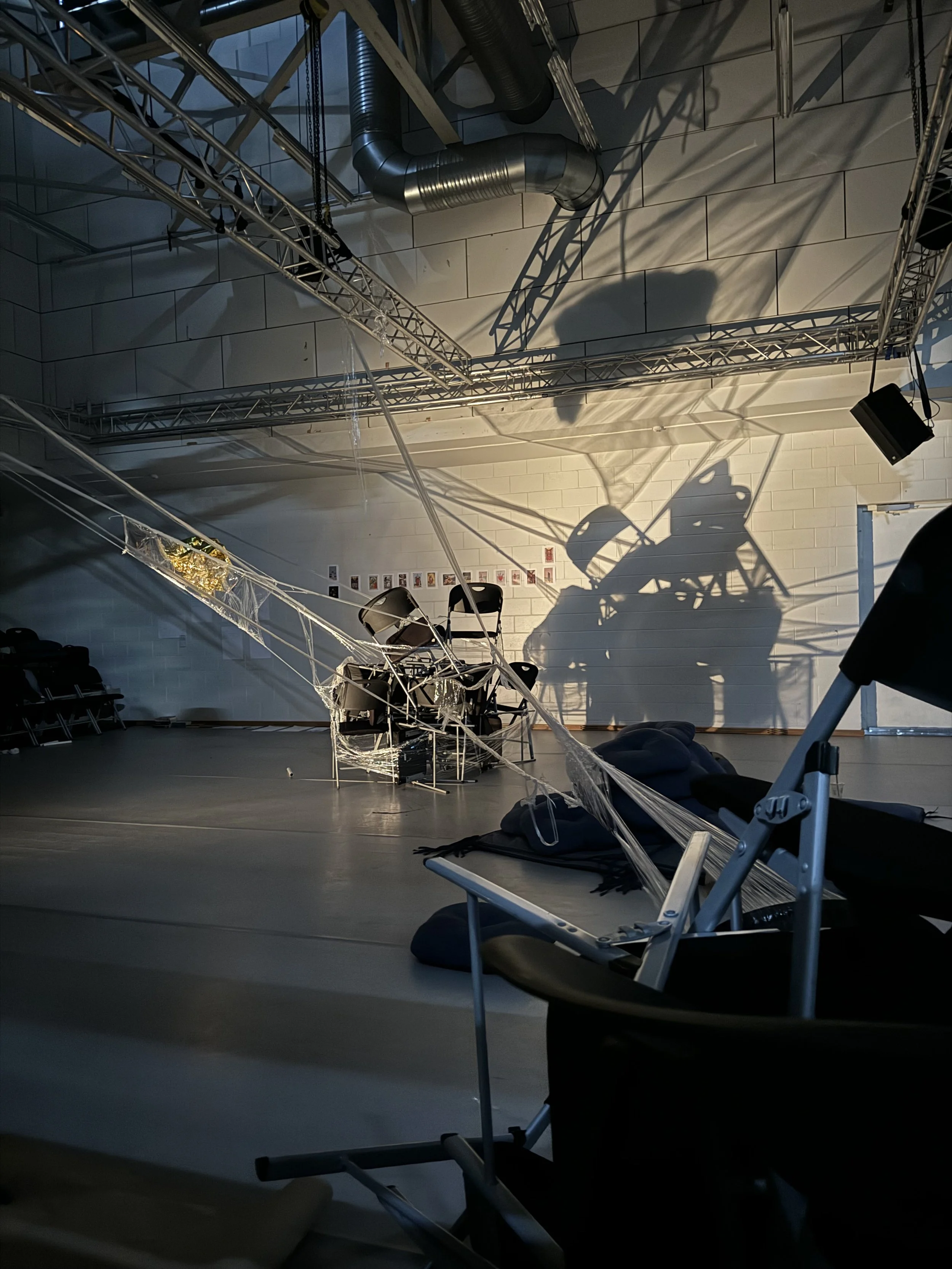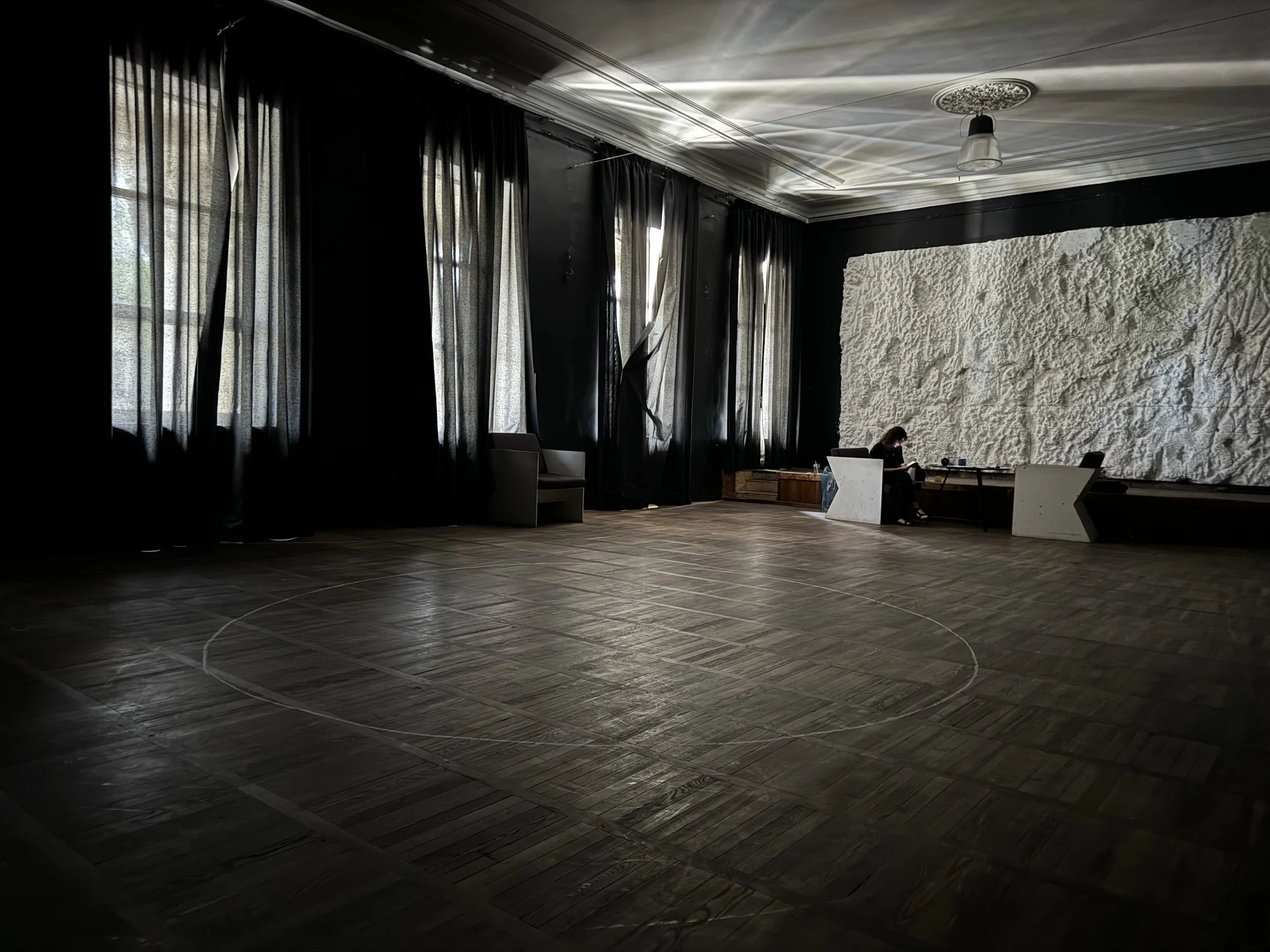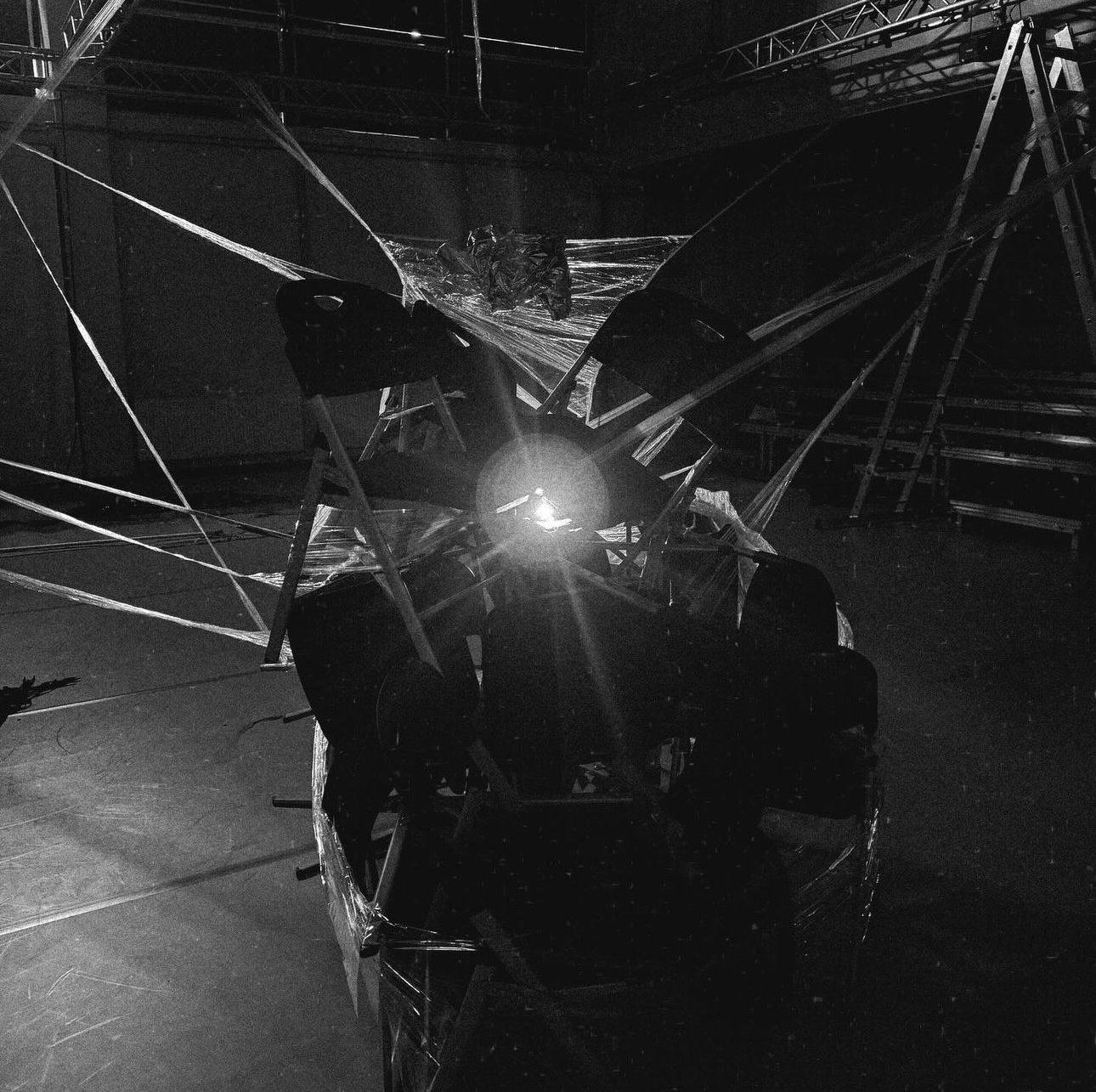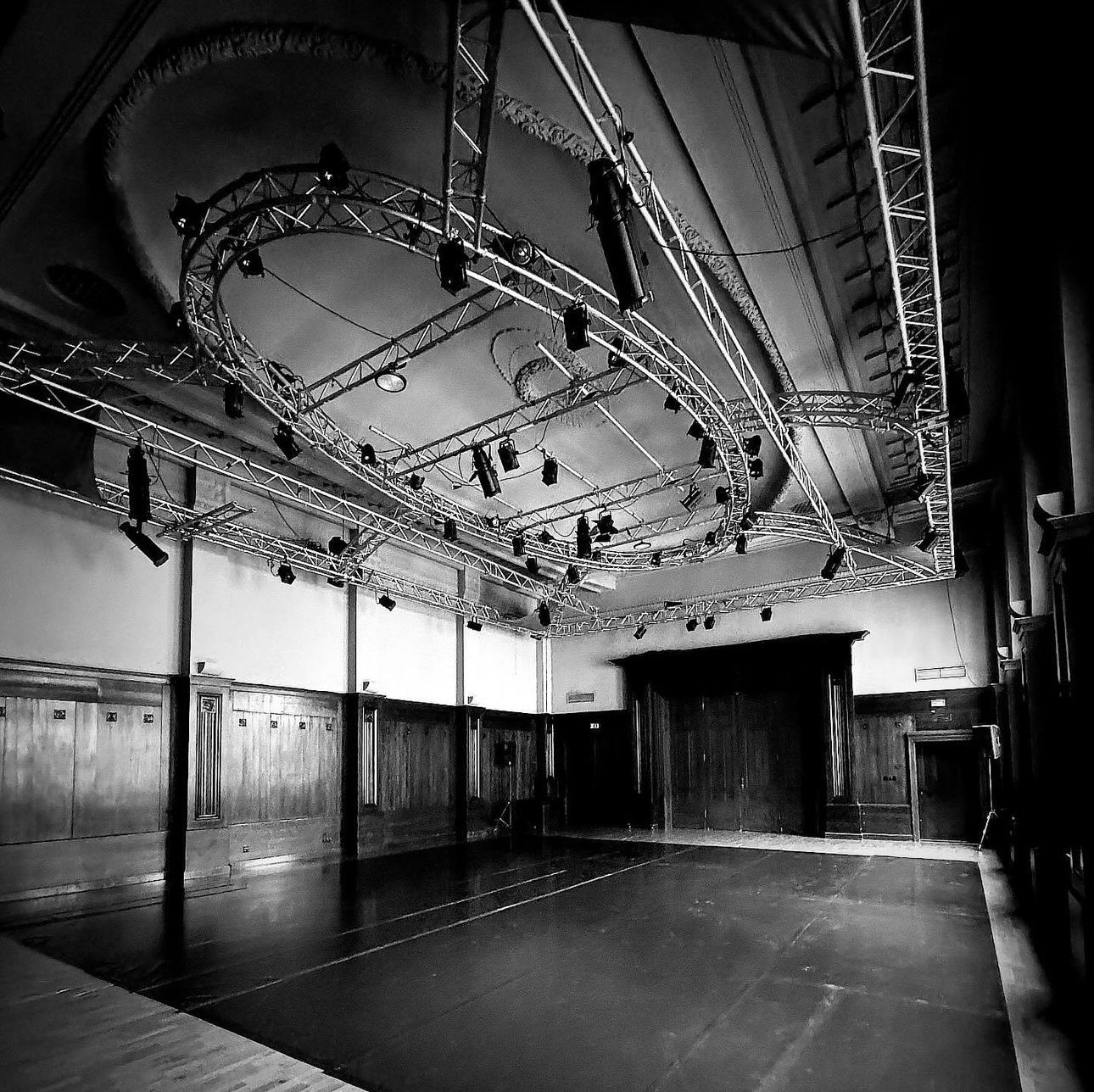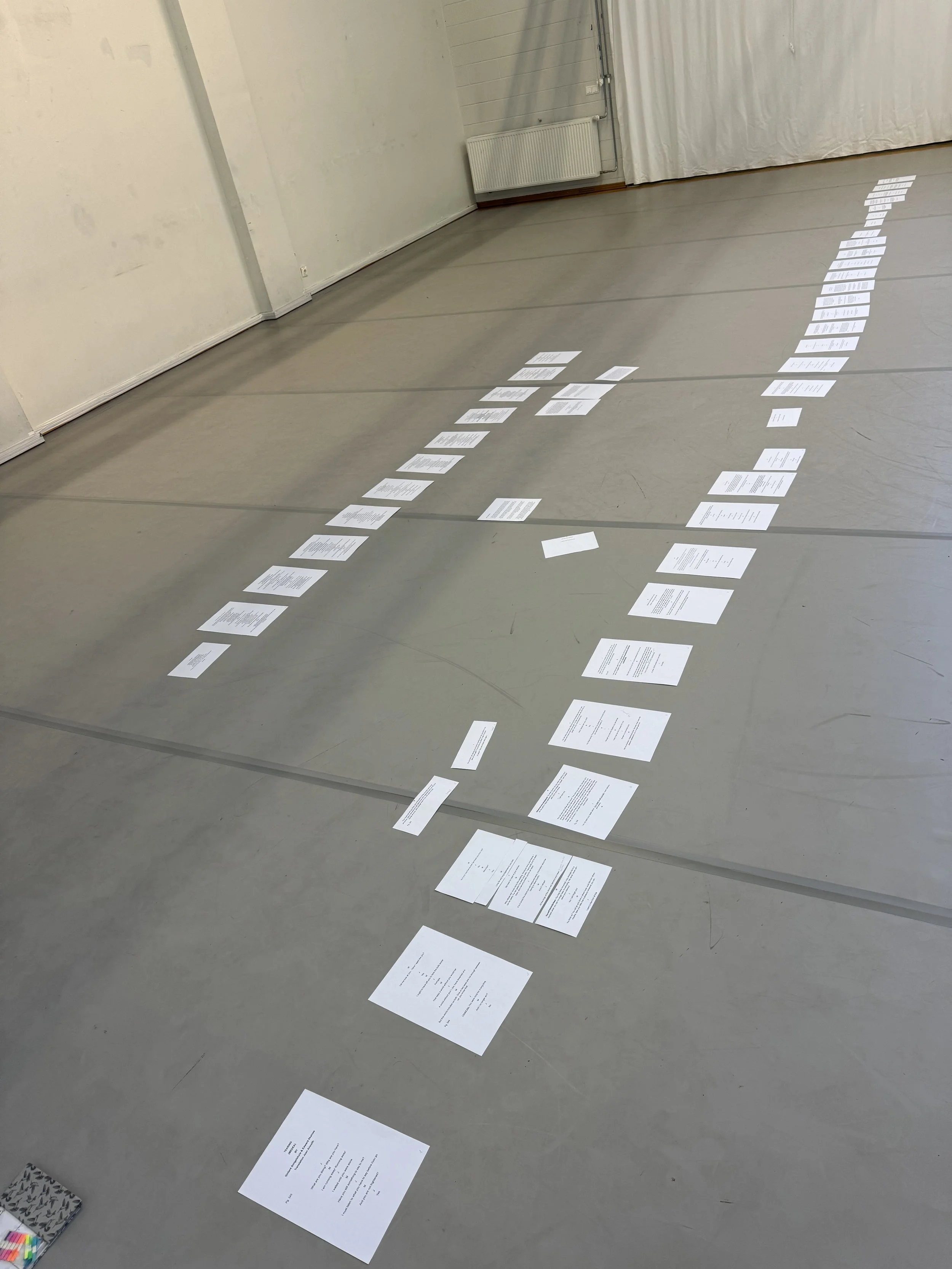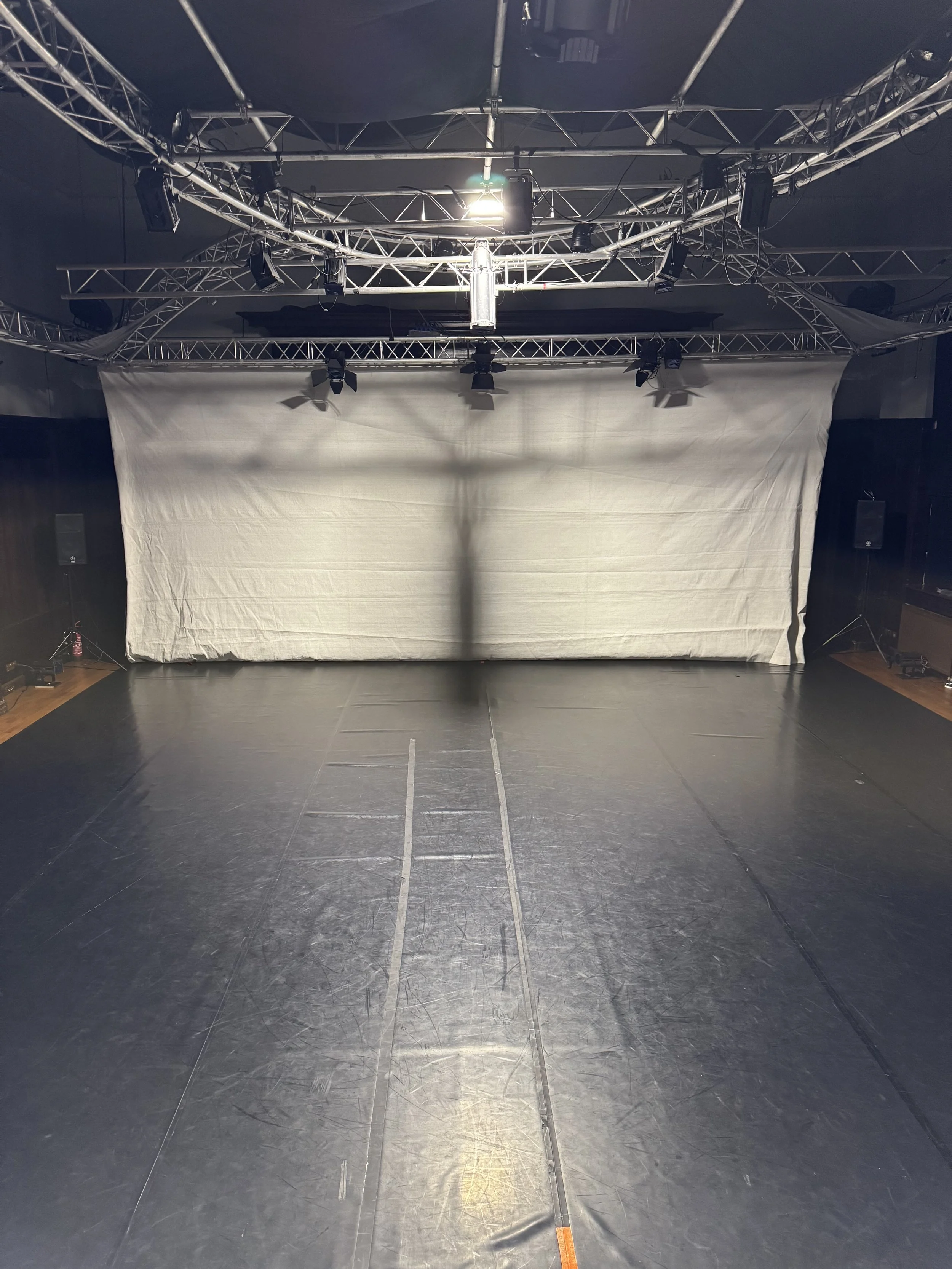
INFERNO is a devised work by Gintarė Šmigelskytė (Lithuania) and Edward Skaines (Australia), deconstructing the final encounter of Medea and Jason through questions of identity, narcissism, and gender — drawing on translations from Jean Anouilh, Edward Philip Coleridge, and Euripides.
INFERNO
Created & performed
By
Gintarė Šmigelskytė & Edward Skaines
Inspired by
Jean Anouilh
&
Edward Philip Coleridge’s
Translation of Euripides play ‘Medea’
INFERNO is a devised theatre work deconstructing the final conversation between Medea and Jason — set not in the world of myth, but inside the collapsing landscape of Medea’s psyche.
The piece begins at the moment of abandonment. Nowhere to go, nothing left, Medea makes a desperate and sovereign act: to burn everything to the ground — to reclaim, in destruction, some final measure of control. In that moment Jason appears. Real or not.
What follows is their last encounter — a modern collision between two people who once existed as a single entity, now on opposite sides of a rupture neither fully chose. But INFERNO refuses the clean lines of victim and perpetrator. As the piece progresses, roles blur and reverse. Language breaks and repeats. The same words pass between different mouths. Identity — who is speaking, who is suffering, who is Medea — becomes the central instability the work refuses to resolve.
Drawing on texts by Euripides, Jean Anouilh, and Edward Philip Coleridge’s, the work moves between registers: classical myth and raw domestic argument, poetic monologue and fractured repetition, stillness and eruption. It explores identity, gender, narcissism, separation, and the particular erasure that comes with immigration — the loss of self that accumulates when you no longer belong anywhere, to anyone, including yourself.
Fusing physical theatre, clowning, Brechtian device, absurdism, and multimedia, INFERNO builds a theatrical language that is precise enough to hold the argument and unstable enough to feel like a mind coming apart — which is exactly where it takes place.
-
2024 - STL (Tallinn, Estonia)
2024 - The Hook (Vilnius, Lithuania)
2024 - The Grotowski Institute (Wroclaw, Poland)
2025 - The Grotowski Institute (Wroclaw, Poland)
2026 - Sakala 3 Teatrimaja (Tallinn, Estonia)
-
Aleksandra Kugacz-Semerci - is an actress and theater pedagogue based at the Grotowski Institute in Wrocław, Poland. She graduated in philosophy from the University of Wrocław and, driven by her deep interest in theater and anthropology, continued her education in theatrical disciplines. This combination of academic inquiry and practical exploration has shaped her unique approach to performance and pedagogy.
Since 2019, she has been associated with Theater ZAR, based in Wrocław, where she has performed in productions such as Anhelli: The Howl, Medee/Moiras, and Back to Beckett. In the same year, she participated in an expedition organized by Theater ZAR to Corsica and Sardinia, where she worked on gathering traditional songs. Since then, she has continued to explore and develop her work with the songs collected during this journey, integrating them into her artistic and pedagogical practice. In collaboration with Mertcan Semerci and Jarosław Fret, she co-created the performance Nobody Meets Nobody.
From 2014 to 2018, Aleksandra was associated with the Matejka Studio, led by Matej Matejka under the auspices of the Grotowski Institute. Her contributions included the site-specific performance Harmony of Contradictions: Poland(2014) and the production of the film No More Heroes (2016). Additionally, she was part of Palimpsest of Space: Reconstruction, a collaboration with the Turkish artistic collective Budalasultan from Izmir in 2016, conducted as part of the Tandem program initiated by Studio Matejka. She also played a significant role in the performance Angry Man: Variations in Defense of Anger (2017–2018).
In 2015 and 2016, she received a scholarship from the Minister of Culture and National Heritage to execute the project Be at Home, which explored the post-war experiences of former Breslau inhabitants. She has also been involved in numerous multidisciplinary social and artistic projects addressing diverse communities and combating social exclusion.
She recently performed in the performance Life in This House is Over directed by Samantha Shay (Source Material) presented in partnership with the Pina Bausch Zentrum and the Grotowski Institute. This production, which premiered in November 2024 at the Grotowski Institute, reflects Aleksandra’s commitment to cross-disciplinary collaboration.
teatrzar.pl/en/aleksandra-kugacz-semerci/
Mertcan Semerci - moved to Poland and joined Studio Matejka in 2016, where he co-created the performance Angry Man. In Defence of Anger and participated in workshops under Matej Matejka’s direction. During this period, he also collaborated with international ensembles, including Alkemisterna in Gothenburg (Suffering: On Our Perception of Pain) and Theatre CHOREA (2.0.4.5. Metaphysical Miniopera).
Since 2018, Mertcan has been a key member of Teatr ZAR at the Grotowski Institute. He has performed in productions such as Medeas: On Getting Across, Anhelli: The Howl, and Back to Beckett. In 2019, he joined Teatr ZAR’s expeditions to Corsica and Sardinia, studying traditional songs and integrating this material into his artistic work.
He also collaborated with Aleksandra Kugacz-Semerci and Jarosław Fret on the performance Nobody Meets Nobody, directed by Fret. Mertcan appeared in the 2024 production Life in This House Is Over, directed by Samantha Shay, developed in partnership with Source Material, Teatr ZAR, and Pina Bausch Zentrum. The performance, which premiered at the Grotowski Institute, explored the interplay of ritual, voice, and physical dramaturgy.
Alongside his performance work, he is a theatre pedagogue at the Grotowski Institute and has led movement- and physical theatre–focused workshops in Spain, Hungary, Turkey, and Italy.
His artistic practice also includes polyphonic singing, with experience in Corsican, Sardinian, and Georgian traditions. He has participated in research expeditions in Spain focused on flamenco, as well as in Corsica and Georgia, researching traditional vocal practices. As a theatre pedagogue at the Grotowski Institute, Mertcan leads workshops that connect movement, voice, and acting through physical training, martial arts practices, and traditional polyphonic singing.
-